Loading...
Do not worry,
we wait with you...
94 km by road from Málaga-Costa del Sol Airport (AGP). To get around the area there is car rental in Marbella, the closest pick-up office.
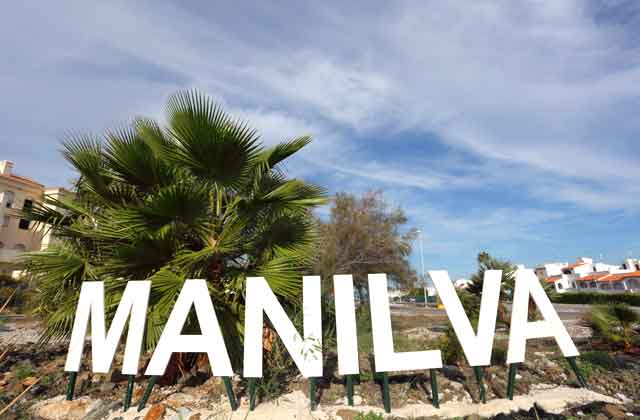
Manilva is the westernmost municipality in the province of Málaga, on the border with Cádiz and at the far end of the Costa del Sol. It is made up of the village of Manilva, inland and surrounded by vineyards, and the coastal settlements of San Luis de Sabinillas, El Castillo and La Duquesa. It has more than eight kilometres of beaches, an 18th-century castle built on top of a Roman villa and a long tradition of Muscat grapes.
Explore the Costa del Sol by car
Pick up your car at Málaga Airport and explore the province at your own pace.
Car rental at Málaga AirportManilva sits at the western tip of the Costa del Sol, beyond Estepona and next to the province of Cádiz. It is just under 100 km from Málaga Airport, around an hour along the AP-7 toll motorway, or a little longer on the A-7 motorway via Marbella and Estepona. With your own car it is easy to combine the beach with the village of Manilva, the vineyards and trips to Casares or Gibraltar.
If you are flying in, you can pick up your rental car at Málaga Airport with Marbesol, with no deposit and all-inclusive rates.
Manilva has more than 8 km of coastline with very different beaches: Punta Chullera, La Duquesa and Las Gaviotas, Sabinillas, El Castillo and Los Toros, the last of these a pebble beach that gets deep quite close to the shore. In 2026 the beaches of Sabinillas and Las Gaviotas and the Puerto de La Duquesa hold a Blue Flag.
The Castillo de la Duquesa. It was built in 1767, in the reign of Charles III, as part of the coastal defences against piracy. It stands on top of a Roman villa, whose materials it reused, and today houses the Municipal Archaeology Museum. It is listed as a Bien de Interés Cultural (Site of Cultural Interest). Next to it are Roman remains: baths, a fish-salting factory and a necropolis.
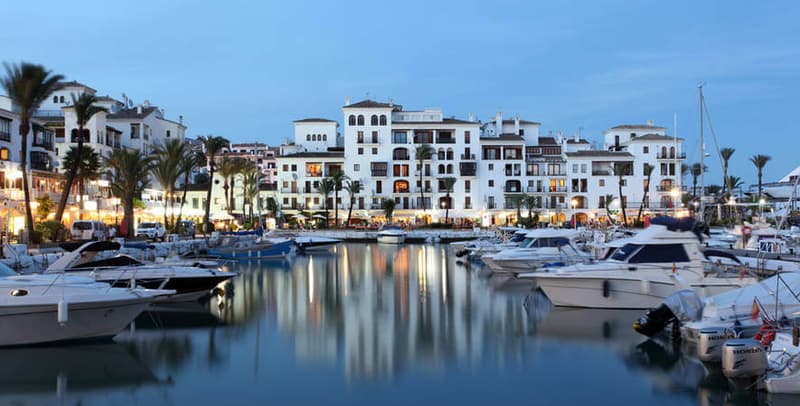
The Puerto de La Duquesa. Manilva’s marina, with more than 300 berths, is one of the liveliest spots in the municipality, with restaurants and terraces facing the sea.
The village of Manilva. The highlight of the old quarter is the 18th-century church of Santa Ana, where the town’s patron saint is venerated.
The Torre de la Chullera. A 16th-century watchtower, built to warn of approaching pirates, on the headland of the same name.
Nearby: the Baños de la Hedionda. Beside the river Manilva, though just inside the municipality of Casares, are these sulphurous baths of Roman origin, listed as a Bien de Interés Cultural.
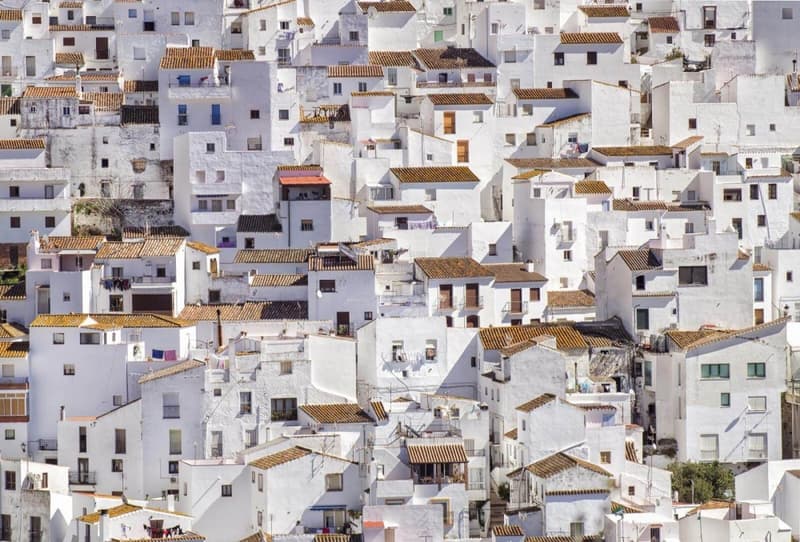
Manilva is one of the few places on the coast that still has vineyards. Muscat of Alexandria grapes are grown without irrigation on its hillsides and used to make a local Muscat wine. The tradition is celebrated every year in early September with the Fiesta de la Vendimia (grape harvest festival), featuring grape treading, the first must, the grape offering and a contest for the heaviest bunch. It has been declared of tourist interest by the Diputación de Málaga (provincial council).
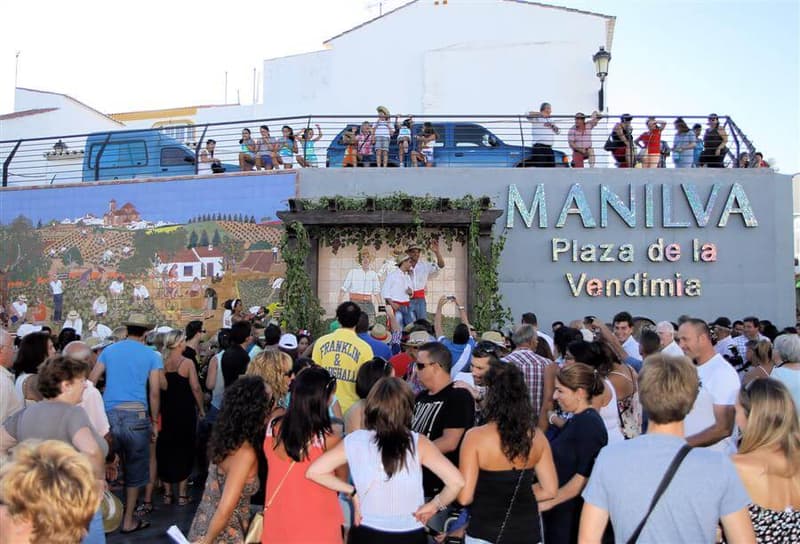
In July, the Virgen del Carmen is carried in a sea procession on the 16th in Sabinillas and El Castillo, and on the 26th the town celebrates Santa Ana, patron saint of Manilva. August brings the Feria de Agosto and the San Luis de Sabinillas festivities, and the summer closes with the Fiesta de la Vendimia.
The Romans were already making use of this coast, as the villa and fish-salting factory at the Castillo de la Duquesa show. In the 16th century watchtowers such as the Torre de la Chullera were built to defend against piracy, and in 1767 the castle was built. Manilva belonged to Casares until the late 18th century, when it became a municipality in its own right.
Manilva’s cuisine looks to the sea, with fresh fish and seafood at the restaurants in the marina and in Sabinillas, and to the countryside, with Muscat wine and grapes from its vineyards.
