52 km by road from Málaga-Costa del Sol Airport (AGP).
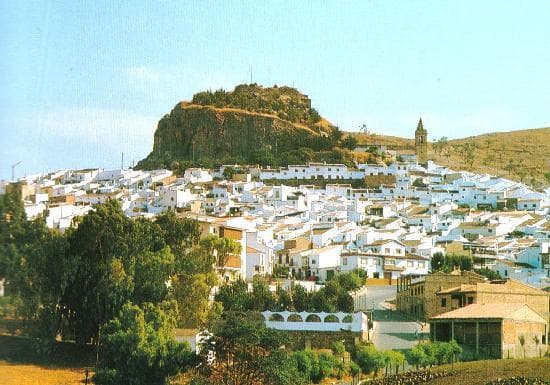
Ardales is an inland village in Málaga province, in the Guadalteba district, best known as the place where the Caminito del Rey begins. Surrounded by reservoirs and mountains, it also has a cave with Palaeolithic art, the ruins of Bobastro and a castle high up on the Peña.
Explore the Costa del Sol by car
Pick up your car at Málaga Airport and explore the province at your own pace.
Car rental at Málaga AirportArdales is about 55 km from Málaga city, some 50 minutes along the A-357 dual carriageway towards Cártama and Pizarra. From Málaga Airport it is also about 55 km, just under an hour, and about 60 km to the Caminito del Rey entrance. It is not easy to reach by public transport, so a car is the most practical way to see the village, the Caminito and the reservoirs in a single day.
If you are flying in, you can pick up your rental car at Málaga Airport with Marbesol, with no deposit and all-inclusive rates.
This is a walkway pinned to the walls of the Desfiladero de los Gaitanes gorge, built between 1901 and 1905 for the El Chorro hydroelectric plant. After years of closure, it was restored by the Diputación de Málaga (the provincial council) and reopened in March 2015. The full route is about 8 km long, 2.9 km of it on walkways, and is one-way only, from north to south, taking around 3 to 4 hours. It starts in Ardales, at the north entrance by the reservoirs, where the Reception Centre and car park are, and ends in El Chorro, which belongs to Álora; a shuttle bus takes you back to the start.
Tickets must be bought in advance on the official Caminito del Rey website. Helmets are compulsory, the minimum age is 8 and animals are not allowed. It closes in heavy rain or strong wind.
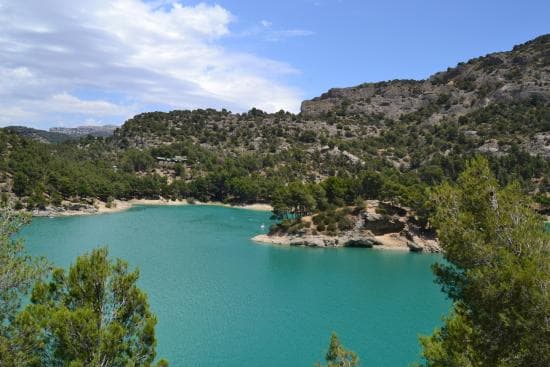
Ardales is surrounded by three reservoirs: the Conde de Guadalhorce, the Guadalhorce and the Guadalteba. The Conde de Guadalhorce dam was completed in 1921, when King Alfonso XIII laid the last stone; the title of count was given to the engineer Rafael Benjumea, who championed the project. Next to the reservoirs is the viewpoint known as the Sillón del Rey (the King’s Chair).
Also called the Cueva de Doña Trinidad Grund, the cave was exposed by an earthquake in 1821. In 1918 the researcher Henri Breuil identified its Palaeolithic art, with more than a thousand depictions, and studies published in 2018 attribute some markings to Neanderthals, more than 65,000 years ago. Visits are always guided, in small groups and by prior booking, from the “La Prehistoria en Ardales” Interpretation Centre, which is also the tourist office.
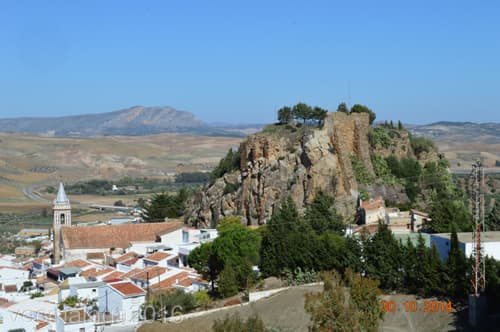
On the Mesas de Villaverde, a few kilometres from the village, lie the ruins of Bobastro, dating from the 9th and 10th centuries and linked to Omar ibn Hafsun’s rebellion against the Emirate of Córdoba. The most striking feature is its Mozarabic rock-cut church, carved into the stone, which can be seen on guided tours. Above the village rise the remains of the Castillo de la Peña, of Moorish origin, with two walled enclosures and nine towers.
Highlights of the village centre include the Iglesia de Nuestra Señora de los Remedios, with its Baroque doorway, the Capuchin convent, the Ermita de la Encarnación chapel and the Puente de la Molina bridge over the river Turón.
San Isidro is celebrated on 15 May with a romería (country pilgrimage) beside the Guadalhorce reservoir. The Feria Grande, in honour of the patron saint, the Virgen de Villaverde, takes place in the first week of September, with the main day on the 8th. In February, the Fiesta de la Matanza shares out pork products among locals and visitors.
The cave shows that the area has been inhabited since prehistoric times. In the 9th and 10th centuries it was the setting for Ibn Hafsun’s revolt, and in the 14th and 15th centuries Ardales changed hands several times as a frontier stronghold between the Nasrid kingdom of Granada and Castile. In the early 20th century the construction of the El Chorro hydroelectric plant, the Caminito del Rey and the Conde de Guadalhorce dam transformed the landscape.
Inland cooking: caldereta de cabrito (kid stew), lamb, pork charcuterie, porra (a thick cold tomato soup), migas (fried breadcrumbs) and, for something sweet, almond biscuits and roscos (ring-shaped pastries).
